Category Archives: Addiction News

A bottle of Old Crow whiskey is superimposed on a black-and-white photo of Ulysses S. Grant standing beside a tent, with a quote from Abraham Lincoln praising Grant's drinking.

Ulysses S. Grant: The Hammered Hero Who Saved the Union

Let’s just get the uncomfortable question out of the way: was saving the Union even the right move?

Essentially, America is a dysfunctional family at odds with itself. It always has been. Maybe the effort to preserve the Union would’ve been better spent developing a refugee program to get enslaved people out of there — rather than forcing together states that fundamentally didn’t (and still don’t) want to share a house.

We keep pretending this is a “united” country, but it’s not. It’s stratified. West Coast folks aren’t going to care which restroom trans people use, any more than Southerners are giving up Jesus or guns. In a way, the whole thing feels like the perfect alcoholic decision: “It doesn’t work and we hate each other… let’s save it!”

And the guy who pulled off that chaotic Hail Mary? He was an alcoholic.

Ulysses S. Grant wasn’t some polished, idealized figure out of a marble statue. He was a messy, complicated, painfully human man — and a severe alcoholic. He drank himself out of the army once before the Civil War. He was known to disappear into benders that had his peers worried, embarrassed, or both. And yet, when the country was literally splitting in two, he was the guy who held it together.

He led the Union Army to victory. Not because he was clean-cut or sober or even particularly diplomatic — but because he was relentless. Smart. Tough. And oddly moral in his own quiet way. Later, as President, he tried (and mostly failed) to steer Reconstruction in a more just direction. Still, he fought for Black Americans’ civil rights when it wasn’t exactly a winning political strategy.

Grant’s drinking was never a footnote — it was part of his story. His critics used it against him. His supporters tried to cover it up. But the truth is, he was a man at war with both the Confederacy and his own demons — and still managed to do something extraordinary.

And yet, ultimately, Grant lost his fight. We know now what he didn’t: that heavy drinking combined with smoking exponentially increases the likelihood of cancer. Grant died of throat cancer in his 60s — not that old — after enduring a brutal final year writing his memoirs so his family wouldn’t be left penniless. Even at the end, he was grinding it out, doing what needed to be done.

If you’ve ever felt like you were too broken, too addicted, or too far gone to make a difference, remember Ulysses S. Grant. The guy might’ve smelled like bourbon and bad decisions half the time, but he still saved the goddamn country. You’re not out of the fight.
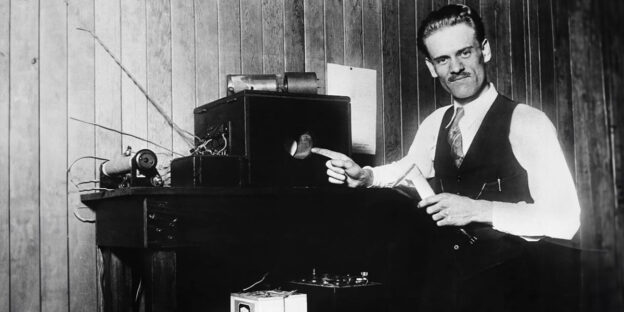
A black-and-white photo of an early 20th-century inventor in a vest and tie pointing at a cathode-ray tube on a bulky electronic device, surrounded by vintage equipment in a wood-paneled room.

High Functioning, Still Human: Alcoholics Who Changed the World

We tend to talk about alcoholics like they’re just sad sacks at the end of the bar, cautionary tales in court-ordered group therapy, or plotlines in movies that end in DUIs or overdoses. But the truth is a hell of a lot more complicated — and more interesting. Alcoholics aren’t just heartbreaking and frustrating. They’re often brilliant. Visionary. World-changing.

Yes, addiction can wreck lives. But it doesn’t always erase potential or talent. It can certainly give pause to wonder what an alcoholic in recovery could achieve.

Fat shaming is out. We don’t say “retard” anymore — and we shouldn’t. But somehow we still toss around “drunk” or “junkie” like it’s acceptable. We still reduce people to their worst moments. We ignore the complexities of the human experience. This kind of erasure isn’t so different from how we’ve historically ignored the contributions of women, or African Americans, or anyone pushed to the margins.

Where would we be without alcoholics? No, really — think about that.

So if you’re an alcoholic feeling like a loser, the family black sheep, the fuck-up they don’t talk about at holidays? You’re in good company.

If we want to build a more compassionate, honest culture around addiction, we have to stop seeing alcoholics only through the lens of tragedy and failure. They are — we are — whole people. Capable of greatness and screw-ups, sometimes in the same hour.

So, if you’re watching TV right now? Thank an alcoholic.

Philo Farnsworth: The Drunk Who Invented TV

Before TikTok influencers, HBO dramas, or “Friends” reruns numbing the existential dread at 2 a.m., there was a kid in Idaho — 14 years old — sketching the first concept of what would become television on a plowed field. That kid was Philo Farnsworth, and yeah, he was an alcoholic. A genius one.

Farnsworth didn’t just invent TV. He imagined it before most people even had indoor plumbing. He figured out how to transmit moving pictures electronically. The guy dreamed of sharing knowledge and images around the world — and then actually made it happen. He also spent much of his adult life fighting off depression, disappointment, and, yes, a drinking problem.

But here’s the thing: if you’ve ever watched anything on a screen — from breaking news to “The Real Housewives,” you’re witnessing the legacy of a man who wrestled with addiction.

His drinking didn’t cancel out his brilliance. And his invention didn’t cure his suffering. He was both: an innovator and a struggling human being.

It’s time we hold space for that truth. Because when we only define people by their addiction, we erase the rest of the story.

A group of sharks swim through deep blue ocean waters, creating a sense of tension and danger in the underwater scene.

Choosing Mental Health and Substance Abuse Treatment: It’s Not So Simple

Navigating mental health and substance abuse treatment is like trying to order a meal in a restaurant where the menu is in a language you don’t speak, and you’re not even sure they’re serving food at all.

There are endless considerations. Do you want a residential program, outpatient, 12-step-based, harm reduction (good luck finding that)? What about insurance, what about the fit with your life, your family, your career? These are questions that demand real, honest answers, not just a slick sales pitch.

Speak to an admissions counselor, and it will feel more like you’re buying a timeshare than making a decision that will weigh heavily on you and your family. That’s the hard truth: the business of treatment can be as shady as a used car lot. A lot of people are in it for the money, not the mission. The websites are full of glossy images and promises of transformation, but they rarely tell the real story—how treatment can be a revolving door, how relapse isn’t a moral failing, and how no program, no matter how expensive, isn’t a magic bullet.

Is it all just a street corner scam? A shell game? An argument can be made that it is. Lack of training among staff, insurance fraud, an evangelical approach to AA, and the abysmal rate of success all lead to some very serious questions. Caveat emptor.

Think about the previous career of many people in the rehab industrial complex—drug dealing. Oftentimes, that’s the ethical standard being applied to their new life.

One of my favorites? There’s a program that offers petting a wolf. To be clear, there is no peer-reviewed research to support petting wolves as treatment for mental health, but the website implication is that it is. Might be an interesting metaphor or activity, but it’s not really doing anything for your recovery.

Sadly, it seems that it’s a lot like the weight loss industry, where the real profit is in failure—so the industry closely holds an ineffective system. You keep coming back, and they keep taking your money.

And here’s something else to consider: the overwhelmingly vast majority of treatment options out there aren’t really treatment at all. They’re 12-step indoctrination camps, which might be okay for you—but it might not. If you don’t want to be force-fed the same dogma as everyone else, you have to dig deeper and find an approach that aligns with your needs, your beliefs, and your circumstances.

With all this said, treatment can be helpful in gaining a running start into one’s self-regulated recovery. The key is finding what’s right for you. I’m often asked, “What’s the best rehab?” My answer is always: the best rehab is the one that’s best for you.

That’s why it’s so important to take your time. Ask questions. If it feels wrong, it probably is. If it feels like a high-pressure sales call, hang up. You’re not buying a timeshare; you’re trying to find help.

If you want to explore treatment in a way that’s grounded in reality and compassion—not glossy marketing—I offer a free discovery session Let’s see if it makes sense to work together. No bullshit, no pressure. Just real talk about what might work for you.

— Joe Schrank

Alcohol, other drugs and suicide reach record levels

Today the New York Times reported the grim reality of death in America at the hands of what amounts to ignoring mental health. I’ll be 50 this month and had the battery of tests with my doctor when one reaches that milestone. It’s not fun, they poke, they prod, they send you to various rooms for various indignities but it has to be done. As a sober guy, I have to take care of my health as an overarching plan to stay in remission from addictive disease. The prescribed screenings are for a reason and, thankfully, I am in great health. As a side note, where would my health be were I not sober and committed to exercise? Likely not good. Of course they told me I’m too fat. Heavy sigh, a constant struggle but the good news is, they know what they’re doing, they have the knowledge, values, and skills to screen for health issues as we age but there was a blaring omission. As I sat talking to the doctor, apologizing for my teenage diet, nobody ever asked “how are you?”. It’s not a criticism of my doctor or the rest of the staff, it’s an observation about healthcare in America. We forget or maybe we ignore mental and emotional health. What should have happened is the doctor should have said “ok, get dressed and head down the hall, the social worker will meet with you” and they should be screening for depression, anxiety, trauma, substance misuse, all the things that lead people to poor mental health which has a severe impact on physical health. They didn’t. It’s no wonder in an age of isolation, loneliness, shame and stigma, were in such poor mental health and here is the result. America does have an obesity crisis and an opioid crisis, we can read about that daily but we also have a mental health crisis. There are reasons people use drugs and extinguishing drug use is only part of that story. We don’t often hear that we should pay as much attention to our mental health as we do to or physical health but we should. Or maybe we should consider them all part of a comprehensive plan to stay health for as long as we can.

https://www.nytimes.com/2019/03/07/us/deaths-drugs-suicide-record.html

Paul LePage: Government Archie Bunker

paul lepageThis much is true, Paul LePage, governor of Maine has likely had better weeks. The stanch conservative governor has a reputation of having the tact and demeanor, not to mention the beliefs, of Archie Bunker. LePage is riddled with cartoons. He is an overblown embodiment of a racist republican blowhard, verbalizing what liberals surmise people like Lepage are thinking. Governor LePage ditches pesky euphemisms and just lobs grenades anywhere he can. It’s what makes him oddly endearing.

Last October, the governor made national news when he was lamenting all the”drug dealers from New York delivering heroin and impregnating white girls” to his beloved Maine. Lepage became America’s filter-less uncle embarrassing us at a holiday dinner while trying to impress a new girlfriend. His press office scurried about to come up with a statement but what can you say after a statement like that?

Read the rest of this article on EpicTimes.com.